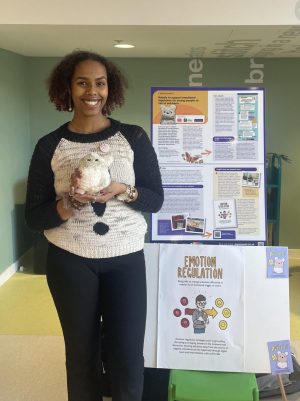

Children, families and researchers explore emotional wellbeing with Purrble at Nottinghamshire’s Festival of Science and Curiosity (FOSAC)
What happens when a cuddly creature, young people, and conversations about emotions come together?
Digital Youth researchers and members of our Young Persons Advisory Group, Sprouting Minds, set out to explore this when they took Purrble, a socially assistive robot designed to support emotional regulation, to this year’s Nottinghamshire Festival of Science and Curiosity (FOSAC).
Over two busy festival events at Nottingham Central Library and Bulwell Riverside Library, the team spoke with 106 children, young people, parents and carers about their experiences of interacting with Purrble and where they thought it could make a difference.
The response was overwhelmingly positive.
Connecting with Purrble: A young person and family perspective
Purrble may be a robot, but the young people at these events quickly treated it like a friend.
They described Purrble as cute, adorable, beautiful, and calming, while many were determined to soothe the creature by stroking and comforting it. More than 20 young people expressed a strong desire to own one themselves.
Some of the comments made during the sessions highlighted just how quickly people connected with Purrble:
“Didn’t know a robot could be like this.”
“Looks like a bear.”
“Would call him Bob.”
One parent returned to the research stand to share how their child, who had felt nervous about attending the festival, became calmer after spending time with Purrble and was then able to explore the event more confidently.
Another family shared a particularly memorable moment when an autistic child spent an extended period interacting with Purrble before writing two feedback postcards. His mother explained that it was the first time he had chosen to write anything in months.
Beyond Cute: Supporting Emotional Wellbeing
While families were drawn to Purrble because of its soft appearance and interactive nature, conversations quickly turned to where it could be useful in everyday life.
Parents, carers, teachers and children suggested a wide range of settings where Purrble might provide emotional support, particularly during stressful or anxious moments.
Schools emerged as the most frequently mentioned setting. Participants felt Purrble could help children who experience anxiety, emotional distress, sensory difficulties, school transitions, or challenges associated with special educational needs and disabilities (SEND).
One secondary school teacher reflected on the emotional challenges facing young people today, describing “high anxiety, low resilience across ages.”
Participants also suggested that Purrble could support children who are waiting for mental health services, educational assessments, or additional support through an Education, Health and Care Plan (EHCP).
Potential in Healthcare Settings
Hospitals were another setting raised repeatedly by families.
Parents spoke about how Purrble could provide comfort before operations, blood tests and medical procedures. Others felt it might help children manage feelings of loneliness and distress during hospital stays, particularly when family members have had to leave for the day.
Some participants even highlighted potential benefits beyond childhood. Suggestions included supporting people living with dementia, helping individuals receiving palliative care, and providing comfort during therapy sessions.
These conversations revealed a common theme: people saw Purrble not just as a toy, but as a potential source of comfort during difficult moments.
Shaping Future Research Together
The Digital Youth team is currently exploring whether Purrble could support emotional regulation, mental health and self-harm prevention among LGBTQIA+ young people. The festival provided a valuable opportunity to hear directly from families and communities about their ideas for future research.
As well as sharing potential uses, visitors also suggested ways Purrble could evolve. Ideas ranged from adding moveable ears and tails to incorporating interactive features such as sounds, music or conversation.
Perhaps most importantly, the sessions highlighted the value of engaging communities in research from the very beginning.
By listening to children, young people, parents, carers and practitioners, researchers gained insights that may not emerge through traditional research methods alone. Families identified real-world situations where emotional support is needed, helping to shape future questions about how technologies such as Purrble might be used in schools, healthcare settings and at home.
Looking Ahead
Across both events, one message came through clearly: children and adults alike saw significant potential in Purrble as a tool for comfort, emotional regulation and wellbeing.
Whether helping a nervous child navigate a busy environment, supporting young people experiencing anxiety, or providing companionship during challenging life experiences, participants identified numerous ways that socially assistive technologies could make a positive difference.
The team’s findings will help inform future research and development, ensuring that the voices of children, families and communities remain at the heart of innovation in mental health and wellbeing.
This work was supported by the Medical Research Council. The team would like to thank everyone who visited the stand and generously shared their experiences and ideas during the Nottinghamshire Festival of Science and Curiosity 2026.